Disclaimer:
Please be aware that the content herein has not been peer reviewed. It consists of personal reflections, insights, and learnings of the contributor(s). It may not be exhaustive, nor does it aim to be authoritative knowledge.
Overview
Prepared by (Name of the experimenter)
[REDACTED]
On date (Day/Month/Year)
13/02/2023
Current status of experimental activity
Completed
What portfolio does this activity correspond to? If any
Citizen participation and governance
What is the frontier challenge does this activity responds to?
Citizen participation and governance
What is the learning question(from your action learning plan) is this activity related to?
We maintain our original learning questions: What are the institutional, cultural, political, and social barriers to enabling participatory forms of governance? What is the space of opportunity to design, develop and implement binding participatory processes in decision-making processes of interest for citizens at different levels (community, city, region, country)? For this experiment, we proposed the following focused question: To what extent can the training and mentoring of local government officials in the use of participatory methods increase the utilization of participatory tools in addressing issues related to the Sustainable Development Goals (SDGs)?
Please categorize the type that best identifies this experimental activity:
Quasi Experimental (Analytical, observations, etc)
Which sector are you partnering with for this activity? Please select all that apply
United Nations agency, Public Sector, Academia
Please list the names of partners mentioned in the previous question:
Municipality of Natalio (Itapúa) Municipality of Pilar (Ñeembucu) Tomas Romero Pereira Municipality (Itapúa) Ñeembucú Governorate Volunteer Intern at the University of Córdoba
Design
What is the specific learning intent of the activity?
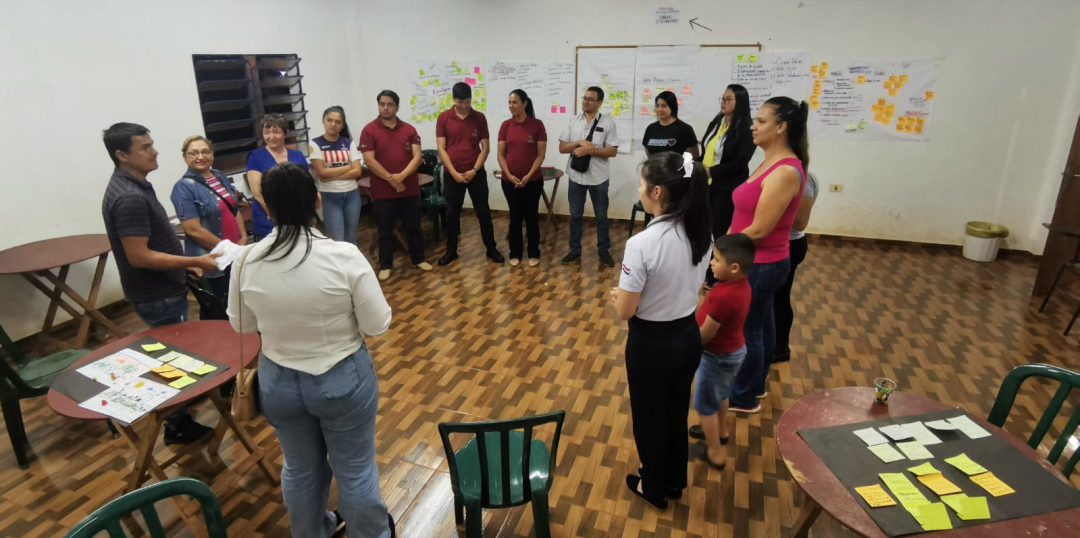
This experiment consisted of the first part of a larger intervention. In this phase, we measured the impact of training on officials. In the second phase, we measured the impact of activities on the participating population. We have developed a comprehensive training program in participatory governance and innovation aimed at municipal officials and key stakeholders. The main purpose is to provide municipalities with methodological tools to initiate, guide, and implement co-creation processes from start to finish. Additionally, we aim to equip municipalities with methodological tools to define pilot projects that will follow the laboratory methodology. The process includes validating a Methodological Guide for the implementation of co-creation processes within the framework of citizen laboratories. We use a heuristic content evaluation tool based on the analysis of a case to determine the impact of the intervention on training participants, comparing it with a control group of non-participating officials.
What is your hypothesis? IF... THEN....
If we offer training to municipal officials It will improve the perceptions and opinions they have about the use of participatory tools in the municipal process.
Does the activity use a control group for comparison?
Yes, a different group entirely
How is the intervention assigned to different groups in your experiment?
Non-random assignment
Describe which actions will you take to test your hypothesis:
To assess the intervention outcomes, we designed a questionnaire presenting a fictional scenario in a municipality facing challenges in solid waste management involving multiple stakeholders. Participants were required to propose five steps to design a municipal plan addressing the issue after reviewing the case. The questionnaire ensured anonymity, but demographic data such as age, gender, municipal work experience, and two questions regarding their confidence in applying participatory tools and their assessment of importance were included at the end. The survey was administered to officials who participated in the workshops of the Municipalities of Pilar and Natalio. Officials with similar roles in a neighboring municipality and the Governorate based in the same city were included as the control group. This methodological approach effectively allowed for the evaluation of the training impact in comparison to a relevant control group.
Results
Was the original hypothesis (If.. then) proven or disproven?
The results provide evidence to assert that our original hypothesis was verified: IF we provide training to municipal officials, THEN the use of participatory methodologies in municipal planning processes will increase. Those who participated in the training sessions and the organization of citizen laboratories DID propose more participatory plans. On a scale of 0 to 5, where 0 is not participatory at all and 5 is highly participatory co-creation, training program attendees had an average score 1.5 points higher. To present these results, we converted the scores given by the evaluators for each response into numerical values and calculated the overall mean of each participant's responses. We then compared the difference in means between the training and control groups and verified statistical significance using the t-test for mean differences. The experiment's impact was determined by the percentage increase between the average scores of both groups. Analyses were conducted using the R program and were carried out by a scholarship recipient from the University of Córdoba, who contributed as a volunteer.
Do you have observations about the methodology chosen for the experiment? What would you change?
The methodology used was developed specifically for this project. It was a Heuristic Evaluation of content by expert evaluators, based on responses given by participants to a fictitious scenario posed. Using a scale based on the Participation Ladder, the evaluators rated how participatory these intervention proposals were. We believe that the tool was sensitive enough to detect differences between the groups. Additionally, we measured the reliability of the tool with Cronbach's Alpha test. An evaluator repeated her scores a week apart, in order to verify whether the scores awarded remained consistent. Comparing both evaluations we obtained a coefficient of 0.85, which is considered to have excellent reliability.
From design to results, how long did this activity take? (Time in months)
8 months
What were the actual monetary resources invested in this activity? (Amount in USD)
[REDACTED] USD (in the general Tavarandu programme, including implementation of trainning ant citizen lab in two municipalities and two evaluation)
Does this activity have a follow up or a next stage? Please explain
Learning
What do you know now about the action plan learning question that you did not know before? What were your main learnings during this experiment?
The main learnings from the action plan learning question are as follows: Evolution of Citizen Participation Models: The understanding is that existing citizen participation systems need to evolve towards more proactive, creative, and collaborative models. Development of Participatory Methodologies: Methodologies have been developed in collaboration with municipal officials to foster conversations that activate collective intelligence and enable genuine co-creation between municipal government and citizens. Characteristics of Participatory Processes: Participation should not be dull, mandatory, exclusive, or discriminatory. It is not a training, instructional, linear, or vertical process. It is not imposed, individualistic, but rather group-oriented. A truly participatory process involves the engagement of all members, avoiding unilateral decisions. Identifying Non-Participatory Processes: Processes are not participatory when there is no decision-making power, decisions are predetermined, or when there is a significant power hierarchy without equal communication conditions. Examples include events with exclusive invitations and situations where only one person speaks while others remain silent. Meaning of Collaboration: Collaboration entails feeling useful to the community, fostering creativity through shared ideas, and a willingness to contribute knowledge and resources without selfishness. It emphasizes a positive attitude, complementarity, addition rather than subtraction, and the culture of "hechakuaa" (working together). Understanding the Co-Creation Process: Co-creation is likened to a shared journey on a ship with equal participants, complementarity, and continuous feedback. It involves contributing to and feeling ownership of the created outcome, recognizing that everyone has valuable contributions, and sharing power to invent something new.
What were the main obstacles and challenges you encountered during this activity?
Negative Impact of Unwelcoming Spaces: Spaces that ignore or exclude opinions, lack respect, rely on lies, make participants feel like intruders, and lack empathy and tolerance for diverse viewpoints create discomfort and discourage participation. Conditions for Co-Creation: Co-creation requires trust, respect, relinquishing power, a conducive environment, inclusive infrastructure, imagination, fearlessness in expressing opinions, diverse actors, tools to channel ideas, a clear and engaging method, a shared goal, and an understanding of the collective creation process. Everyone involved needs to know where they are heading.





 11Sustainable cities and communities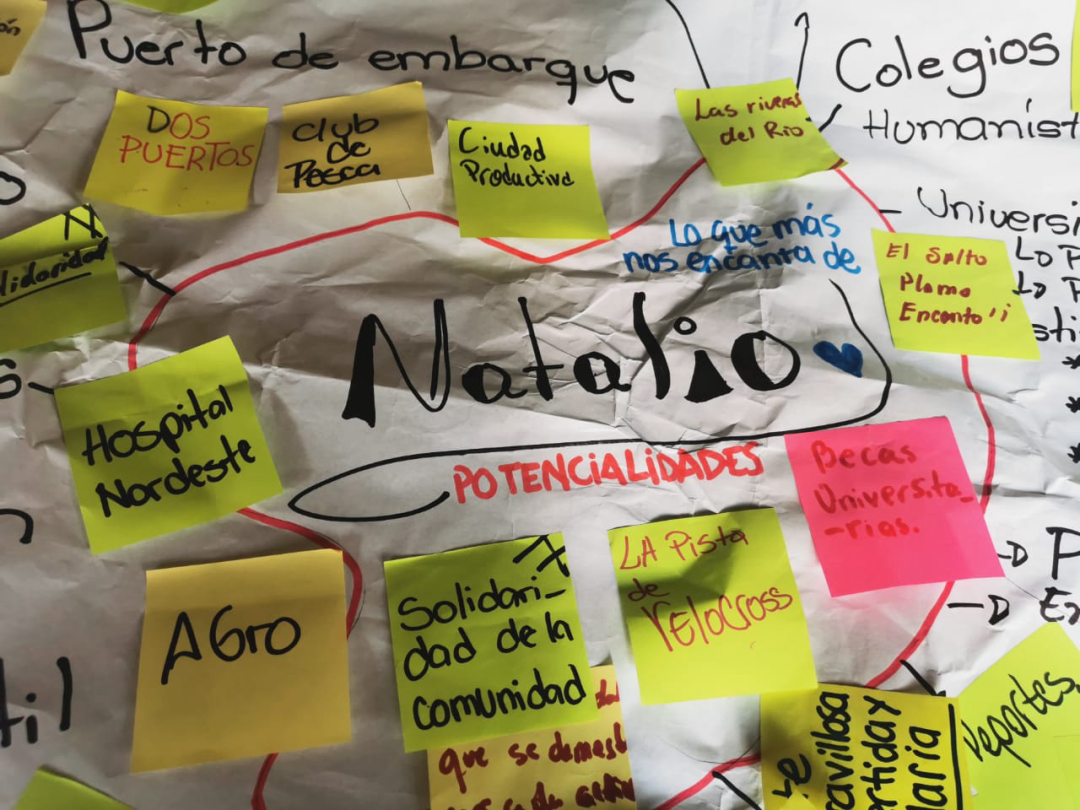


Comments
Log in to add a comment or reply.