Disclaimer:
Please be aware that the content herein has not been peer reviewed. It consists of personal reflections, insights, and learnings of the contributor(s). It may not be exhaustive, nor does it aim to be authoritative knowledge.
Learnings on your challenge
What are the top key insights you generated about your learning challenge during this Action Learning Plan? (Please list a maximum of 5 key insights)
Partnerships and program integration are crucial for scale and sustainability. Merging the "Creative Confidence" curriculum with Shababuna Ezweh's established "Made in" model created a more practical training program, efficiently leveraging existing networks and expertise to reach new governorates (Aqaba, Jerash) and expand impact beyond the initial pilot in Madaba/Petra.
Market linkages are a critical component of economic empowerment.
Training in creative skills alone is insufficient; direct connections to retail platforms (like JoShop) are essential to translate newfound confidence and production capability into actual income opportunities, validating the product's market fit and providing participants with tangible economic outcomes.
A phased, hands-off approach effectively tests skill retention and independent initiative.
The experiment design, particularly the "Independent Creation Phase" where participants worked without guidance for a month, was valuable for assessing whether the training genuinely built lasting creative confidence and practical ability, moving beyond workshop-dependent learning.
Localized, sustainable production can address specific market gaps.
The initiative confirmed an observed demand for high-quality, locally
made souvenirs that reflect cultural heritage. By using discarded
materials (circular economy principles), the products uniquely meet both
tourist expectations for authentic goods and broader environmental
sustainability goals.
Government and institutional visibility amplifies impact and validates the model.
The official launch event with government officials at a JoShop branch
served not only as a sales opportunity but also as a powerful platform
for recognition. This "showcasing" builds credibility, motivates
participants, and helps integrate community-driven initiatives into
broader local economic and tourism development strategies.
Considering the outcomes of this learning challenge, which of the following best describe the handover process? (Please select all that apply)
Our private sector partners have expanded our joint work through their own resources in our country or internationally
Can you provide more detail on your handover process?
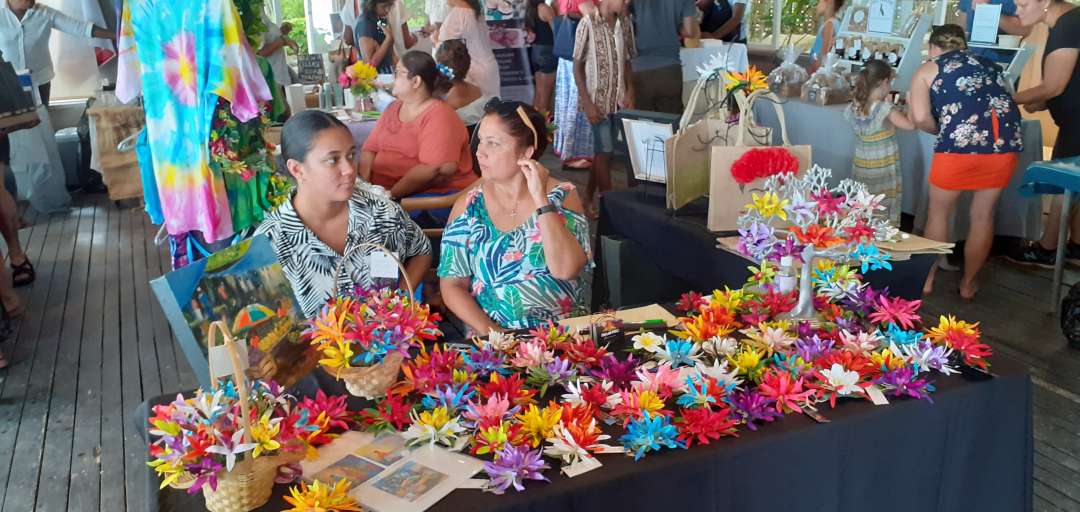
Building on the initial success of the Creative Confidence experiment, the initiative was first conducted with a foundational workshop in Petra rather than Madaba. We then partnered with Shababuna Ezweh to integrate their established “Made in” training model, which specialises in producing sustainable, market-ready tourist souvenirs, into our program. This integrated curriculum was delivered in Aqaba and Jerash, where local youth and women were equipped with both creative confidence and practical craft skills, resulting in 21 distinct, sustainable products.
To ensure these creations reached the market, Shababuna Ezweh further collaborated with JoShop, a leading retail platform. The initiative in Aqaba was formally launched at the JoShop branch in Aqaba, with attendance from government officials and the local community. The event highlighted the tangible impact of the collaboration, showcasing it as a concrete and effective community-based effort in the country.
Please paste any link(s) to blog(s) or publication(s) that articulate the learnings on your frontier challenge.
Data and Methods
Relating to your types of data, why did you chose these? What gaps in available data were these addressing?
Why was it necessary to apply the above innovation method on your frontier challenge? How did these help you to unpack the system?
The application of these innovation methods was essential to address our frontier challenge, empowering women and youth through sustainable handicraft production, because traditional, linear approaches often fail to address the complex interplay of psychological, social, economic, and systemic barriers participants face.
Here is how each method helped unpack and navigate the system:
Behavioural Insights
were necessary to understand and influence the mindset shifts required. Many participants initially lacked belief in their creative and entrepreneurial capabilities. By applying this lens, we designed the training not just to teach skills, but to actively build creative confidence, targeting internal barriers like self-doubt and fear of failure, which are critical to unlocking sustained participation and initiative.
Co-creation
was vital to ensure the solution was relevant, owned, and sustainable within the local context. Rather than imposing an external curriculum, we partnered with Shababuna Ezweh to merge our “Creative Confidence” approach with their established “Made in” model. This collaborative design integrated local knowledge, market understanding, and cultural relevance, creating a program that resonated with participants and addressed real community-identified gaps in quality souvenir production.
Experimentation
allowed us to test our assumptions in a structured, iterative, and evidence-based way. The phased design, training, independent creation, and market engagement served as a real-world pilot. It validated hypotheses about skill retention, market demand, and income potential with minimal risk, generating concrete data (e.g., 21 products created, sales feedback) to inform scaling decisions and future interventions.
Storytelling
transformed abstract concepts like “empowerment” and “sustainability” into compelling, relatable narratives. By highlighting the journey from discarded materials to marketable products and showcasing success at the JoShop launch event, we made the systemic value tangible. This attracted partners, engaged government officials, and motivated participants by framing their work as part of a larger story of cultural preservation and economic change.
Facilitation
provided the essential process and safe space for the other methods to succeed. Skilled facilitation during workshops nurtured creativity, managed group dynamics, and guided the co-creation process. It ensured that behavioural insights were applied sensitively and that the experiment’s phases were conducted effectively, turning the design into actionable learning and tangible outcomes for participants.
Together, these methods moved us beyond a simple “training program.” They enabled a holistic systems intervention that addressed individual psychology (Behavioural Insights), community and partner ecosystems (Co-creation & Facilitation), evidence-based iteration (Experimentation), and broader narrative change (Storytelling), thereby unlocking deeper and more sustainable impact within the local production and tourism landscape.
Partners
Please indicate what partners you have actually worked with for this learning challenge.
Please state the name of the partner:
A non profit organization called Shababuna Ezweh
What sector does your partner belong to?
Civil Society
Please provide a brief description of the partnership.
The Accelerator Lab has a Letter of Intent with Shababuna Ezweh to work on Tourism., The Lab provided support to conduct the creative confidence bit of the workshop along with the workshop expenses as a support to the made in efforts.
Is this a new and unusual partner for UNDP?
No
End
Bonus question: How did the interplay of innovation methods, new forms of data and unusual partners enable you to learn & generate insights, that otherwise you would have not been able to achieve?
Please upload any further supporting evidence / documents / data you have produced on your frontier challenge that showcase your learnings.
The closing form saves automatically or via the blue "save changes" button the top left. Thank you
Comments
Log in to add a comment or reply.