Disclaimer:
Please be aware that the content herein has not been peer reviewed. It consists of personal reflections, insights, and learnings of the contributor(s). It may not be exhaustive, nor does it aim to be authoritative knowledge.
The problem
Solid waste is a damaging problem to a lot of countries. Malaysia faces a bigger challenge for being a dumping ground which has caused severe land and air pollution. The current waste management scenario in Malaysia looks at the increased consumption and waste generation, especially during the COVID-19 pandemic, the usage of oil and petroleum which produce carbon monoxide and the waste compactor trucks also result in environmental issues due to factors such as traffic congestion, rubbish, wastewater and vehicle emissions.
The solution
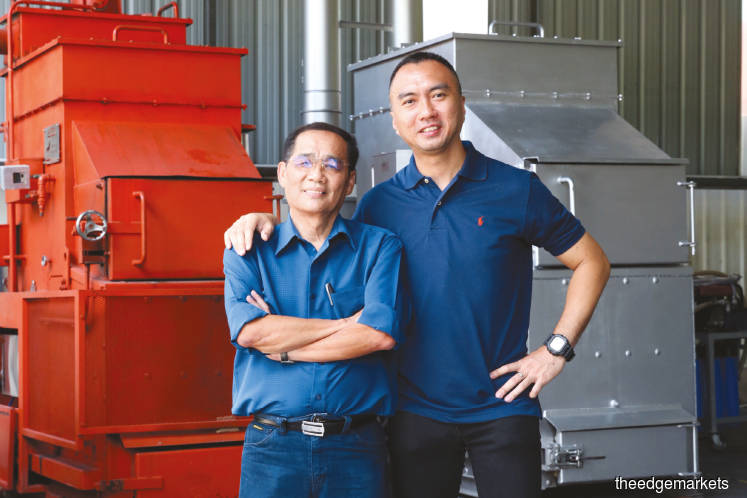
Asher is a 6-metre-tall machine that can reduce most solid waste materials to ash. Waste is put into the Asher and ends up in the thermal degradation chamber where it will decompose via the pyrolysis process. The heat generated from the process is sustained only within the chamber and waste are left to dry, become brittle and eventually turns into ash. The only byproduct of Asher is odourless and neutral vapor.
The Asher modern incinerator has 3 models- the A200S, A250ES, and A400ES which have differences in waste capacity, electric system, and the number of filters. The idea of this machine is to eliminate the waste distribution system and reduce the landfill by treating the waste at its source.
The Asher incinerator machine consists of 3 parts- loading area, electrical (fan and system), and filter & process. To start the initial burn, it requires a wood pallet to increase the heat from room temperature to 600 degrees Celsius. It takes around an hour to treat one batch (per chamber of waste ~ 0.6 m3) of waste, and the ash can be used as a soil conditioner/construction material. It requires continuous feeding of waste for ideally 16 to 18 hours for it to maintain the temperature of the Asher.
The machine is able to destroy various kinds of waste including plastics, electronic waste and rubber with the exception of glass, metals and construction materials.
The machine is also small enough, the size of one car park, for it to be placed at a low cost residential neighborhood without it travelling to various waste stations.




 7Affordable and clean energy
 12Responsible consumption and production
 13Climate action


Comments
Log in to add a comment or reply.