Disclaimer:
Please be aware that the content herein has not been peer reviewed. It consists of personal reflections, insights, and learnings of the contributor(s). It may not be exhaustive, nor does it aim to be authoritative knowledge.
Title
Please provide a name for your action learning plan.
Co-creating inclusive tourism with people with disabilities
Challenge statement
Challenge type: If you are working on multiple challenges, please indicate if this is your "big bet" or "exploratory" challenge.
Please note: we ask you to only submit a maximum of 3 challenges - 1x Big Bet, 2x Exploratory. Each challenge must be submitted individually.
BIG BET
Challenge statement: What is your challenge? (Please answer in specific terms: "Our challenge is that...”.)
Our challenge is that tourism plays a major role in Thailand's development, but it may not be adjusting to the social changes such as aging society and the growing momentum for inclusive development. among others. We need to foster the kind of tourism that allows everyone, elderly and persons with disabilities (PWDs) included, to enjoy tourism experiences - make it 'tourism for all'. In addition, our experience from 2023 shows us that inclusive tourism is not only about providing tourism experiences for PWDs but can also be about creating livelihood opportunities for them e.g. PWDs as service providers in the tourism industry.
Background: What is the history of your challenge? What is causing or driving it? Who is involved? How does the current situation look like? What undesired effects does it produce?
In 2023, the UNDP Accelerator Lab Thailand embarked on a journey to promote ‘community-based tourism for all’ (CBT for all), building the capacity of Thailand’s community-based tourism to welcome everyone, regardless of their different abilities. Given the global demographic trends with an increasing aged population, the development of inclusive tourism will not only benefit people with disabilities (PWDs) but a much wider range of populations. Therefore, this is a mission in alignment with the Leave No One Behind agenda as well as an important market opportunity if Thailand is to stay ahead of the curve in the global tourism landscape. Based on our work last year, we learn that inclusive tourism requires effort at the ecosystem level. Having community-based tourism for all is not enough; we also need the wider ecosystem of tourism, including accommodation, transportation, etc. to be inclusive.
Quantitative evidence: What (official) data sources do you have on this challenge that better exemplifies the importance and urgency of this frontier challenge? You can add text, a link, or a picture.
Our effort in improving accessibility will not only benefit persons with disabilities (PWDs) but will also accommodate a much wider population, especially in countries where aging is an acute phenomenon. In Thailand, there are 2.2 million people holding disability cards. Roughly 50% have physical or mobility impairments, while persons with hearing and visual impairments make up the second and third largest groups, respectively (Department of Empowerment of Persons with Disabilities, 2023). Meanwhile, the population aged over 60 years old is increasing rapidly Globally, the population aged 65 and over is also growing fast with the projection to rise from which will be more than twice the number of children under age 5 (United Nations Population Division, 2022).
Qualitative evidence: What weak signals have you recently spotted that characterizes its urgency? Please provide qualitative information that better exemplifies the importance and urgency of this frontier challenge. You can add text, a link, or a picture.
The tourism landscape has changed rapidly in the past few years, calling for adjustments in the sector. Inclusive tourism is one that can have a major effect on the industry as global demographic trends are
shifting. Inclusive tourism refers to the capacity of tourism to integrate disadvantaged groups so that they can participate in, and benefit from, tourism activity (UNWTO, 2018). Thailand's tourism needs to foster this kind of tourism that allows everyone, regardless of their abilities, to enjoy the tourism experience – make it 'tourism for all'. This is not only to drive the Leave No One Behind agenda but also a market opportunity not to be missed.
Value proposition: What added value or unique value proposition is your Accelerator Lab bringing to solving this challenge? Why is it your Lab that needs to work on this challenge and not other actors within UNDP, other stakeholders in the country respectively? Why is it worth investing resources to this challenge?
With human-centered design, co-creation, and other innovation tools, UNDP Accelerator Lab Thailand can connect the perspectives of the PWDs in co-creating tourism for all initiatives, ones that do not only aim at welcoming travelers with disabilities but also provide livelihood opportunities for PWDs to work as service providers in the tourism sector.
Short “tweet” summary: We would like to tweet what you are working on, can you summarize your challenge in a maximum of 280 characters?
Co-creating inclusive tourism with people with disabilities
Partners
Who are your top 5 partners for this challenge? Please submit from MOST to LEAST important and state Name, Sector and a brief description of the (intended) collaboration.
Please state the name of the partner:
Designated Areas for Sustainable Tourism Administration (DASTA)
What sector does our partner belong to?
Government (&related)
Please provide a brief description of the collaboration.
Implementing partner
Is this a new and unusual partner for UNDP?
No
Who are your top 5 partners for this challenge? Please submit from MOST to LEAST important and state Name, Sector and a brief description of the (intended) collaboration.
Please state the name of the partner:
Songkhla Association of Disable Persons
What sector does our partner belong to?
Civil Society
Please provide a brief description of the collaboration.
Co-creation partner
Is this a new and unusual partner for UNDP?
No
Learning questions
Learning question: What is your learning question for this challenge? What do you need to know or understand to work on your challenge statement?
We want to learn how we can co-create inclusive tourism in ways that do not only engage PWDs as clients but also as service providers, making inclusive tourism the space for PWDs to enjoy tourism experiences as well as an opportunity to make a livelihood.
To what stage(s) in the learning cycle does your learning question relate?
Explore, Test, Grow
Usage of methods: Relating to your choice above, how will you use your methods & tools for this learning question? What value do these add in answering your learning question?
We will connect PWDs perspectives to co-design and co-create inclusive tourism solutions in Songkhla Old Town area
Existing data gaps: Relating to your choice above, what existing gaps in data or information do these new sources of data addressing? What value do these add in answering your learning question?
To ensure that the prototypes truly address the needs of PWDs travelers, we will engage PWDs representatives every step of the way and seek their continuous feedback.
Closing
Early leads to grow: Think about the possible grow phase for this challenge - who might benefit from your work on this challenge or who might be the champions in your country that you should inform or collaborate with early on to help you grow this challenge?
Other tourist destinations can learn from Songkhla, especially through the support of DASTA and UNDP's engagement with the Department of Tourism
END OF ACTION LEARNING PLAN: Thank you! The form saves automatically and your submission has been recorded. You may now exit this window.





 8
8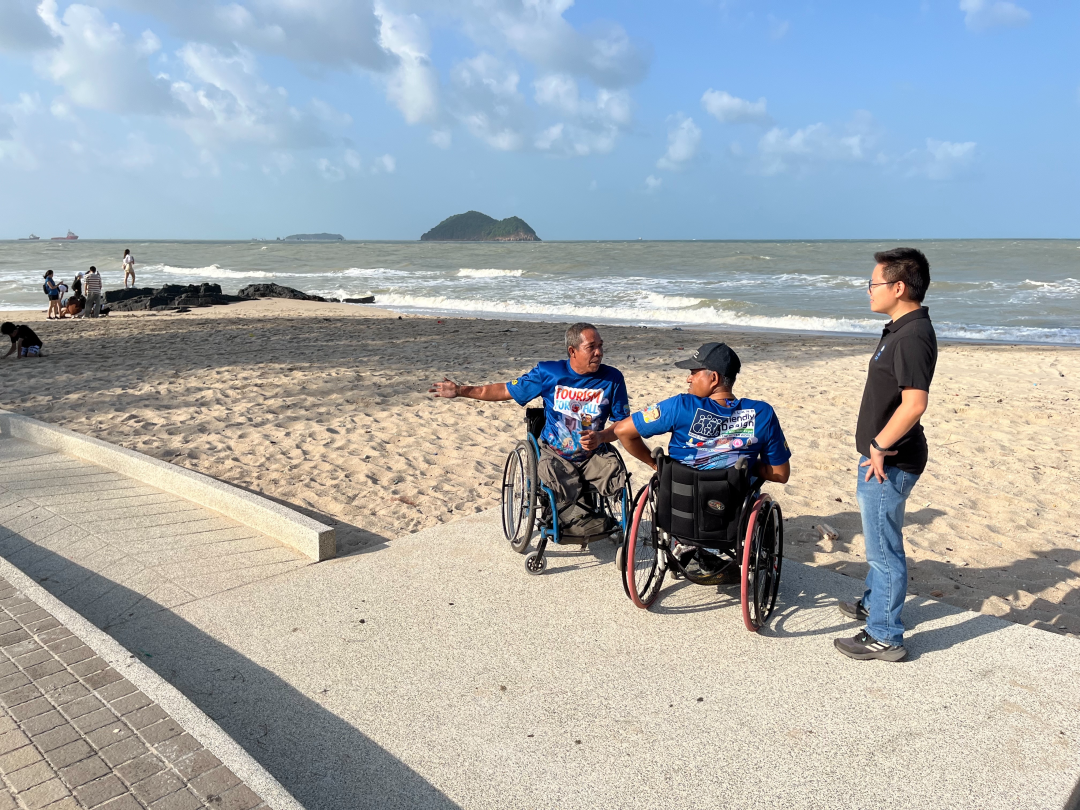
 9Industry, innovation and infrastructure
 10Reduced inequalities
 11Sustainable cities and communities


Comments
Log in to add a comment or reply.