Disclaimer:
Please be aware that the content herein has not been peer reviewed. It consists of personal reflections, insights, and learnings of the contributor(s). It may not be exhaustive, nor does it aim to be authoritative knowledge.
Title
Please provide a name for your action learning plan.
Increasing the resilience of local food systems of SIDS: what are the needs, gaps and opportunities in the food value chain in Mauritius, Rodrigues and Seychelles?
Challenge statement
Challenge type: If you are working on multiple challenges, please indicate if this is your "big bet" or "exploratory" challenge.
Please note: we ask you to only submit a maximum of 3 challenges - 1x Big Bet, 2x Exploratory. Each challenge must be submitted individually.
BIG BET
Challenge statement: What is your challenge? (Please answer in specific terms: "Our challenge is that...”.)
Our challenge is to increase the resilience of food systems in the Republic of Mauritius and the Republic of Seychelles, which are both trade dependent economies, through an increased participation of women and youth in the food value chain and entrepreneurial field, particularly in building and running agri-enterprises.
Background: What is the history of your challenge? What is causing or driving it? Who is involved? How does the current situation look like? What undesired effects does it produce?
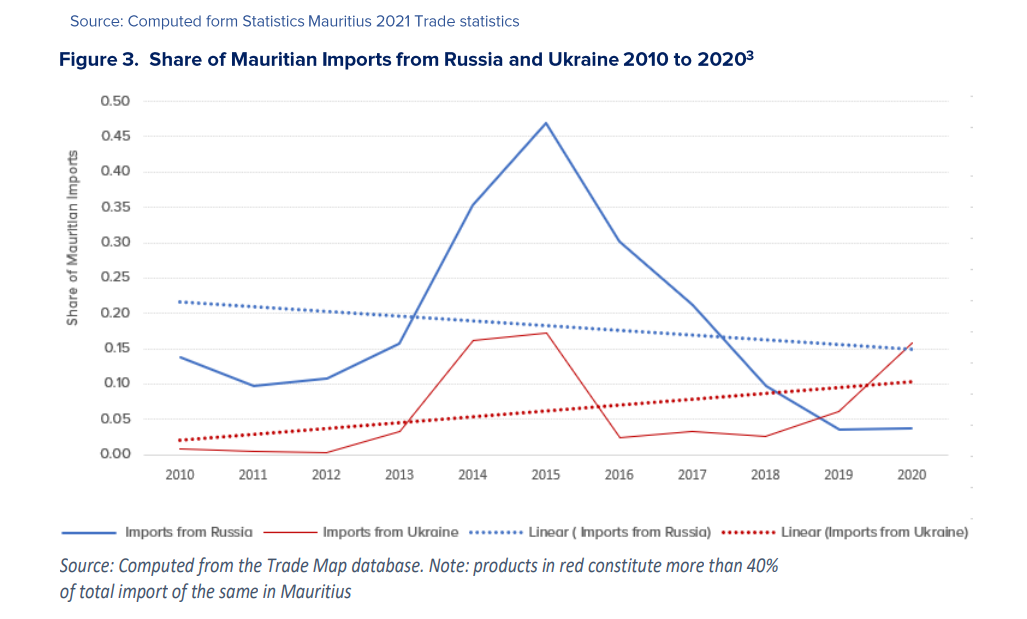
Food systems in Mauritius and Seychelles are fragile and vulnerable due to their high dependency on global supply chains as net importers. The current Ukraine and Russia conflict is further exacerbating the vulnerability of both islands as it is driving the prices of food and other commodities up. The medium to long term outlook for both islands remain volatile as the local food production capacity is limited, except in the production of fruit and vegetable though it is still through conventional and traditional farming. Another challenge linked to the resilience of food systems is the availability of labour. In both Mauritius and Seychelles, agricultural output and productivity rely on an aging population, amplified by youth reluctance to join the sector. Therefore, a consequence is the shortage of labour resulting in a decline in agricultural output for both countries. Further, the sector faces challenges related to competitivity of prices, since they are competing with imported produce, which is being sold at a cheaper price.
Quantitative evidence: What (official) data sources do you have on this challenge that better exemplifies the importance and urgency of this frontier challenge? You can add text, a link, or a picture.
https://www.edbmauritius.org/agro-industry Agriculture's GDP contribution accounts for about 3.9%. Food imports stand at around 75%. For Seychelles, it is about 2.4% (www.statistica.com). Food imports stand at around 90%. In 2017, 'Food & non-alcoholic beverages' constituted the largest share of household consumption expenditure (25%) in Mauritius (Statistics Mauritius). Impact of climate change felt by SIDS, for example, flash floods and cyclones can heavily impact on the agricultural products and cause the prices of vegetables to soar. (OHCHR, Special Rapporteur on the right to food - Food Systems and Human Rights, July 2021). 'Individuals belonging to households in the bottom 40% of the income distribution are mainly employed in traditional sectors such as agriculture, manufacturing, construction, trade, transports and tourism'. (World Bank) / agriculture still perceived as a job sector, which requires low skills and Mauritius has a big narrative to push citizens towards the service sector: https://documents1.worldbank.org/curated/en/181521561655338668/pdf/Job-Creation-and-Labor-Productivity-in-Mauritius.pdf
not applicable
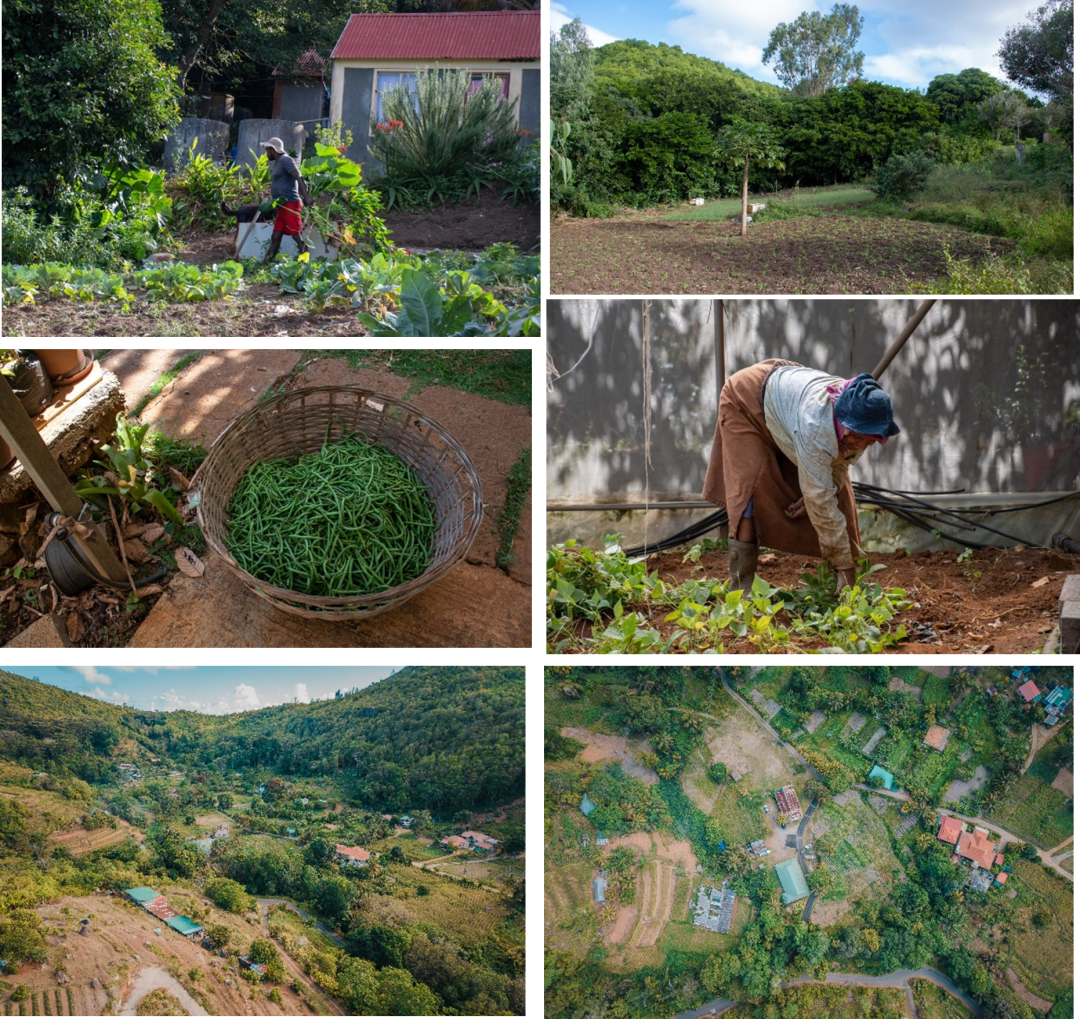
Qualitative evidence: What weak signals have you recently spotted that characterizes its urgency? Please provide qualitative information that better exemplifies the importance and urgency of this frontier challenge. You can add text, a link, or a picture.
Rodrigues: water access and water management. Through community outreach along with our UN Volunteers and conversations on the ground, we picked up several weak signals related to water. We learnt that underground water sources are not being leveraged as official information on their whereabouts are scant and often either with the regional government (a map from 1992 exists) or with the local community (e.g., women and elderly)
Seychelles: labour shortage - Price competitivity (local produce v/s imported produce) - Seychelles has mainly steep ground and practically no flat terrain for agricultural activities. through community outreach and conversations on the ground, weak signals of limited labour in this sector, a reluctance of youth to join this sector and challenges to invest in agricultural activities were picked up.
Mauritius: a labour shortage and dependency on foreign labour. There is a move from the government and private sector to transition to organic farming but little adoption from traditional farmers, an ageing farming population and reluctance of youth to join this sector. Consumer choices and purchasing power dictate local food production and consumption patterns.
Value proposition: What added value or unique value proposition is your Accelerator Lab bringing to solving this challenge? Why is it your Lab that needs to work on this challenge and not other actors within UNDP, other stakeholders in the country respectively? Why is it worth investing resources to this challenge?
Food systems are covered by several UN agencies in both Mauritius and Seychelles. The Lab's primary value is in unlocking information and data on local food systems by using tools that are available to the Lab, where others working on the same issue may not have access to.
The Lab is working closely with both the Socio-Economic unit and Environment unit of the multi-country office to showcase collaboration between project colleagues and the Lab. This is an attempt to bring novel ways of working to the projects while also showcasing a UNDP value proposition to national stakeholders.
The issue of building resilience in food systems is multifaceted and requires intentional co-design and participatory approaches involving new sets of actors as well as those already working on food systems for a long time.
The Lab hopes to facilitate discussions and policy connections through the collection of more data and increased grassroots insights, especially where more women and youth can be mobilised to enter the food value chain to succeed.
Short “tweet” summary: We would like to tweet what you are working on, can you summarize your challenge in a maximum of 280 characters?
Small islands rely heavily on imported and processed foods. Building our local capacity and motivate local produce and consumption has become a priority for both Mauritius & Seychelles. The Lab aims to learn about local food systems and the opportunities for increased resilience.
Partners
Who are your top 5 partners for this challenge? Please submit from MOST to LEAST important and state Name, Sector and a brief description of the (intended) collaboration.
Please state the name of the Parter:
Ministry of Agro Industry and Food Security & Food and Agricultural Research and Extension Institute (FAREI)
What sector does our partner belong to?
Government (&related)
Please provide a brief description of the collaboration.
This Ministry is already a partner to the UNDP. The Accelerator Lab will leverage the partnership, and in particular, with the Food and Agricultural Research and Extension Institute (FAREI).
Is this a new and unusual partner for UNDP?
No
Who are your top 5 partners for this challenge? Please submit from MOST to LEAST important and state Name, Sector and a brief description of the (intended) collaboration.
Please state the name of the Parter:
National Women Entrepreneur Council (NWEC) (Parastatal body under the aegis of the Ministry of Gender)
What sector does our partner belong to?
Government (&related)
Please provide a brief description of the collaboration.
The National Women Entrepreneur Council (NWEC) is the main organization that provides support and assistance to both potential and existing women entrepreneurs in Mauritius, especially in the food systems in Mauritius. The collaboration will unlock access to partners who have a vision in building resilience.
Is this a new and unusual partner for UNDP?
Learning questions
Learning question: What is your learning question for this challenge? What do you need to know or understand to work on your challenge statement?
Can SIDS like Mauritius and Seychelles develop a sustainable and inclusive strategy for increasing the production and consumption of local and nutritious food?
To what stage(s) in the learning cycle does your learning question relate?
Sense, Explore, Test
Usage of methods: Relating to your choice above, how will you use your methods & tools for this learning question? What value do these add in answering your learning question?
We want to develop a participatory design and the system approach to get all institutions and those involved in the food systems in Mauritius to participate in develop a roadmap to income generation for women and youth in the agri-enterprise and agri-business value chain and how they can be best mobilised to succeed in these sectors.
The Lab will also make use of collective intelligence to tap into the intelligence of the community as these tools will help the Lab map the various nodes linked to the food systems, and how these nodes are interconnected.
These tools will also help us include more people/entity that are working in siloes at the moment. The Lab seeks to engage in a co-design process whereby a set of people/entities can come together to design this strategy and work out loud to influence policy and decisions at national level.
Existing data gaps: Relating to your choice above, what existing gaps in data or information do these new sources of data addressing? What value do these add in answering your learning question?
There are data gaps when it concerns real-time data regarding the agricultural sector. While the FAREI might have databases full of important information, these datasets are not always readily available nor accessible. Through systems thinking, participatory observation and surveys, we hope to gather more data.
Closing
Early leads to grow: Think about the possible grow phase for this challenge - who might benefit from your work on this challenge or who might be the champions in your country that you should inform or collaborate with early on to help you grow this challenge?
We think both public and private stakeholders can be interested in taking the challenge further. The participatory approach will help us in two ways: gather data on possible gaps, challenges and opportunities that exist in the food value chain in order to mobilise more women and youth to enter these sectors (we may get information on the specific parts of the food systems our citizens (respondents data) may want to contribute to). The interventions for Seychelles and Rodrigues will also help us gather information and make them more readily available, especially that data is hard to find. This will bring the Lab closer to the needs of the farming community/ies.
END OF ACTION LEARNING PLAN: Thank you! The form saves automatically and your submission has been recorded. You may now exit this window.





 2Zero hunger
 8Decent work and economic growth
 12Responsible consumption and production
 17Partnerships for the goals


Comments
Log in to add a comment or reply.